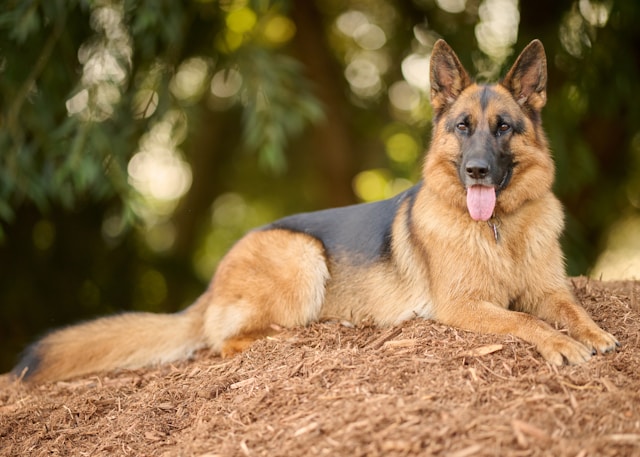
German Shepherd
Good natural dental structure — watch for fractures
Low Risk
Good natural dental structure — watch for fractures
Low RiskGerman Shepherds used for sport, training or working often chew aggressively on training equipment, causing fractures.
Though German Shepherds have one of the lowest disease rates, risk increases after age 7.
The large jaw of the German Shepherd offers good natural tooth spacing, reducing bacterial risk compared to small breeds.
German Shepherds generally accept brushing well once accustomed — their working nature makes establishing a routine easier.
"German Shepherds have great natural dental structure. The main risk is tooth fractures from hard objects. Annual X-rays and avoiding anything your thumbnail can't dent are the two things that matter most."
Handmade in Canada — all-natural formula safe for daily use.
Angled for better access to the back teeth where tartar builds.
Canadian brand — odourless and tasteless daily bowl protection.
Canadian brand — sized for medium and large dogs. One per day.
🇨🇦 = Made or based in Canada · All links go to Amazon.ca with affiliate tag. Affiliate disclosure.
Are German Shepherds prone to dental disease?
German Shepherds are a low-risk breed with good natural tooth structure. Their main dental risk is tooth fractures from powerful chewing.
What should German Shepherds not chew on?
Real bones, antlers, large nylabones and hard plastic toys. Their significant bite force can fracture teeth on hard objects.
How often does a German Shepherd need a dental cleaning?
An annual dental exam with X-rays is appropriate for most German Shepherds.
Does a German Shepherd need daily tooth brushing?
Yes. Though their risk is lower, daily brushing remains the most effective prevention available.
Take Puffy's free 60-second quiz and get a personalised routine instantly.
⚡ Take the Free Quiz