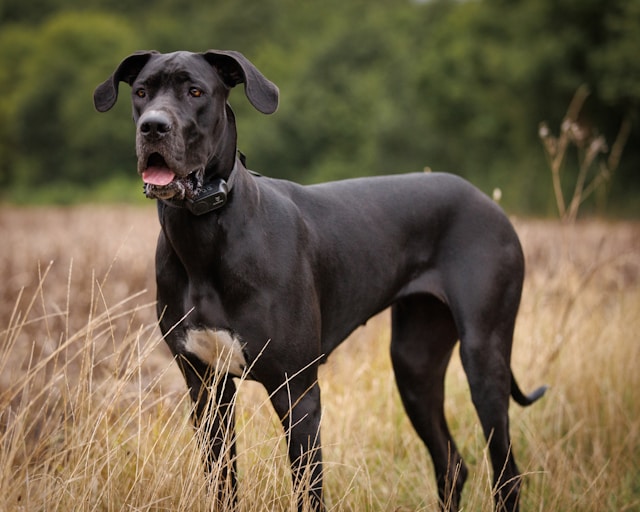
Great Dane
Low risk — but they age faster than smaller breeds
Low Risk
Low risk — but they age faster than smaller breeds
Low RiskGreat Danes have a shorter lifespan than small breeds (7–10 years on average), meaning their senior years arrive earlier.
Great Danes play with significant force and can fracture teeth on inappropriate toys or during play.
Great Danes have one of the lowest periodontal disease rates of commonly studied breeds, thanks to their large, well-spaced jaw.
All dental products must be appropriately sized — small chews provide no mechanical benefit for a large mouth.

"Great Danes have low dental disease rates but age faster than small breeds — a five-year-old Great Dane is closer to a senior. Start annual dental exams early and plan to move to six-monthly checks by age five. Their size means dental procedures are more complex and expensive — prevention is especially worthwhile here."
Handmade in Canada — all-natural formula safe for daily use.
Angled for better access to the back teeth where tartar builds.
Canadian brand — odourless and tasteless daily bowl protection.
Canadian brand — sized for medium and large dogs. One per day.
🇨🇦 = Made or based in Canada · All links go to Amazon.ca with affiliate tag. Affiliate disclosure.
Do Great Danes need dental care if they have large teeth?
Yes, even with lower risk. Great Danes still develop periodontal disease without regular care.
When does a Great Dane become a senior for dental care?
Around age 5. Great Danes age faster than small breeds — intensify care from this age.
What size dental products does a Great Dane need?
Large or Jumbo size for chews. Use a long-handle brush for better access to the back teeth.
How often should a Great Dane have a professional dental cleaning?
An annual exam is appropriate until age 5. From age 5 onwards, consider moving to every 6 months.
Take Puffy's free 60-second quiz and get a personalised routine instantly.
⚡ Take the Free Quiz